Spend five minutes talking about AI with anyone who works in the arts and you'll feel it: a low hum of anger underneath the conversation. Sometimes it surfaces as a joke, sometimes as a flat refusal to engage at all. And the standard response from the technology world — you just don't understand it yet — manages to be both patronising and wrong.
So let's be clear at the outset: the anger is not a failure to keep up. It's a rational response to how these tools were built and how they're being sold. A blog about AI for arts professionals has to start here, honestly, or nothing else it says will deserve your trust.
The grievances are real
The training problem. The big generative models learned to write, draw and compose by ingesting vast quantities of human work — books, paintings, illustration, photography, music — overwhelmingly without the consent, credit or payment of the people who made it. Artists, authors and publishers are contesting this through the courts right now, and whatever the eventual rulings say, the moral point stands on its own: creative work was taken and used to build products that now compete with the very people it was taken from.
The mimicry problem. Type "in the style of" followed by a working artist's name and decades of hard-won craft become a filter anyone can apply in seconds. The people most exposed aren't celebrities with lawyers. They're jobbing illustrators, session musicians and voice artists — the freelancers whose commissions were already precarious.
The money problem. Where generative AI does replace creative work, the fee doesn't go to a cheaper artist. It leaves the creative economy altogether and lands with a handful of technology companies. Nothing flows back to the people whose work made the tools possible.
The pressure problem. When funders and boards hear "efficiency", freelancers hear budget lines being deleted. In some corners — commercial illustration, copywriting, voiceover — that's not a fear about the future. It's already showing up in this year's invoices.
If reading that list makes you angry, good. You're paying attention.
Two different things are wearing the same name
Here's the distinction that gets lost in almost every argument about AI in the arts. Right now, "AI" describes two profoundly different activities:
- AI as a substitute for creative work. Generating an image instead of commissioning an illustrator. Cloning a voice instead of casting an actor. Churning out copy instead of paying a writer. This is what artists are angry about, and the anger is justified.
- AI as a substitute for drudgery. Turning a two-hour recording into usable minutes. Untangling the spreadsheet three predecessors left behind. Producing the first draft of the data tables in a funding report. None of this displaces anyone's artistry. It displaces the evening you were going to lose to it.
The tragedy of this moment is that both things arrive in the same chat window, from the same companies, under the same name. The sector's entirely justified fury at the first is stopping thousands of overstretched arts workers from touching the second. But refusing to let AI take your meeting minutes does nothing to protect an illustrator's commission. It just means you're doing the minutes.
A test you can actually use
You don't need a computer science degree to make good decisions here. You need three questions — and you already have the values to answer them.
- Whose work does this replace? If the answer is "an artist we would otherwise have paid", stop. If the answer is "nobody — this was going to be done badly at 11pm by whoever drew the short straw", carry on.
- Would I be happy to say out loud how this was made? To the artists you work with, to your audience, to your funders. If the thought makes you wince, that wince is information.
- Is a human still accountable for it? These tools get things confidently, fluently wrong. Nothing should leave your organisation that a person hasn't read, checked and put their name to.
Notice what the test does to some comfortable habits. Generating a "free" image for the season brochure instead of hiring a photographer fails question one — that's the substitution problem happening in miniature, inside your own organisation, by your own hand. Meanwhile, using AI to write image descriptions for your access pages, or to make board papers legible, sails through all three.
What to do with the anger
Anger is information too: it tells you what needs protecting. Put it to work.
- Write down your organisation's position. One page will do — what you will use AI for, what you won't, and why. Share it with your artists and your team. The organisations that do this earn trust; the ones that stay vague breed suspicion in both directions.
- Keep commissioning humans, and say so. "Made by people" is becoming something audiences actively look for. Provenance is turning into part of the value of the work — put it in the programme notes.
- Back the fight over consent and payment. The unions and rights bodies pushing for licensing, transparency and compensation need working arts professionals behind them. That fight is where the anger belongs — not aimed at a colleague who used a chatbot to draft a risk assessment.
- Learn enough to be dangerous in the right rooms. Decisions about AI are coming to your organisation whether you engage or not. They'll be made either by informed people who love the art form, or by whoever turned up. Be in the room.
Sitting the whole thing out can feel like solidarity. It isn't. The sector doesn't need arts people who refuse to understand AI — it needs arts people who understand it well enough to draw the lines.
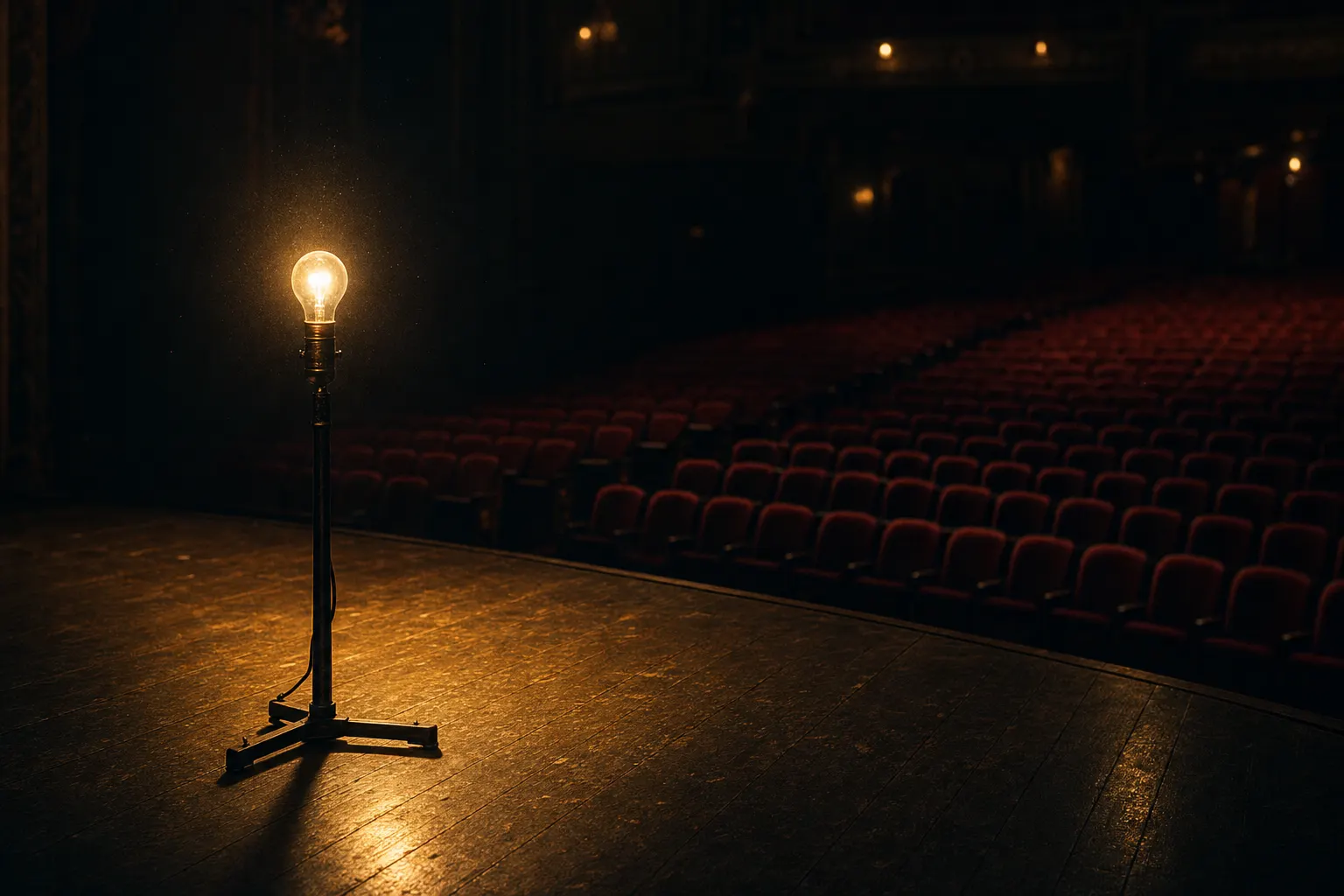
There's an old tradition in theatres of leaving a single bulb burning on an empty stage overnight: the ghost light. It's partly safety, partly superstition, but the meaning underneath is the point — the stage is never left in darkness, because someone is always keeping watch. That's the image at the top of this post, and it's the job description for the next few years. The lights are not going out on human creativity. But somebody does need to keep watch, and it should be us.
Full disclosure: the ghost light image above was AI-generated — a brand-new blog's photography budget being what it is — and we're telling you so because that's question two in action. When something on this site is machine-made, we'll always say.