The question everyone in the sector is quietly carrying — will AI take my job? — is the wrong shape. Jobs aren't taken the way a chess piece is taken. They erode, shift and re-form, task by task. So here's a more honest question, and a more useful one: what does AI do to a Tuesday?
Your job is a bundle
Write down what you actually did last Tuesday. Not the job description — the day. For most arts professionals it looks something like: two hours of email, an hour formatting a report, ninety minutes in meetings, half an hour chasing an invoice, an hour on social media copy, twenty minutes consoling an artist, ten minutes of the actual creative judgement the whole job supposedly revolves around, and a sandwich at your desk.
AI doesn't apply for your job. It nibbles at that list. And it nibbles very unevenly: it's hungry for the formatting, the summarising, the reformatting, the routine correspondence — the unglamorous layer — and completely uninterested in the consoling, the judgement, the relationships and the sandwich.
What the new Tuesday looks like
In organisations already using these tools well, the pattern is consistent. The minutes write themselves and get checked. The report narrative starts at eighty per cent done and gets finished by a human. The email backlog gets triaged with drafts waiting. Two hours come back — and here's the part nobody warns you about: those hours fill with the harder work. More time with artists. More time on the programme. More time on the fundraising relationships that actually move the organisation. The job doesn't get smaller; it gets denser with the parts that need a person — which is either wonderful or exhausting, depending on the week, and is a management question the sector should be discussing more honestly than it is.
The honest caveat
It would be a lie to say no jobs are exposed. Roles that are mostly the nibblable layer — transcription, basic copywriting, routine data entry done as a full-time function — are genuinely shrinking, and pretending otherwise insults the people in them. The sector employs fewer of those pure roles than most industries; arts jobs are notoriously seven jobs in a trench coat, which turns out to be a defence. But if eighty per cent of your week is tasks a machine now does adequately, the strategy is not to hope. It's to deliberately migrate your centre of gravity toward the human parts — the judgement, the relationships, the taste — the things the machines are genuinely bad at. Do it now, while it's a choice rather than a scramble.
For the people running organisations
The freed hours are a windfall, and windfalls get spent deliberately or wasted silently. The worst available move is the quiet one: absorb the savings, trim a role, keep outputs flat and call it efficiency. That road leads to a hollowed-out organisation and a workforce that — rightly — trusts nothing you say about technology again. The better move is to declare where the time goes: mission, access, audiences, the deferred projects. We've written a whole post on that framing, because we think it's the most consequential decision arts leaders will make about AI — more consequential than any choice of tool.
The Tuesday test
Six months from now, run the experiment again: write down what you actually did that day. If AI is being used well around you, the list should contain less formatting and more of whatever you joined the sector to do. If it contains the same drudgery plus a new anxiety, something's being done badly — and it isn't the technology.
Your job is not a chess piece. It's a Tuesday. Guard the parts of it that need you, hand over the parts that never did, and have opinions — loud ones — about what the recovered hours are for.
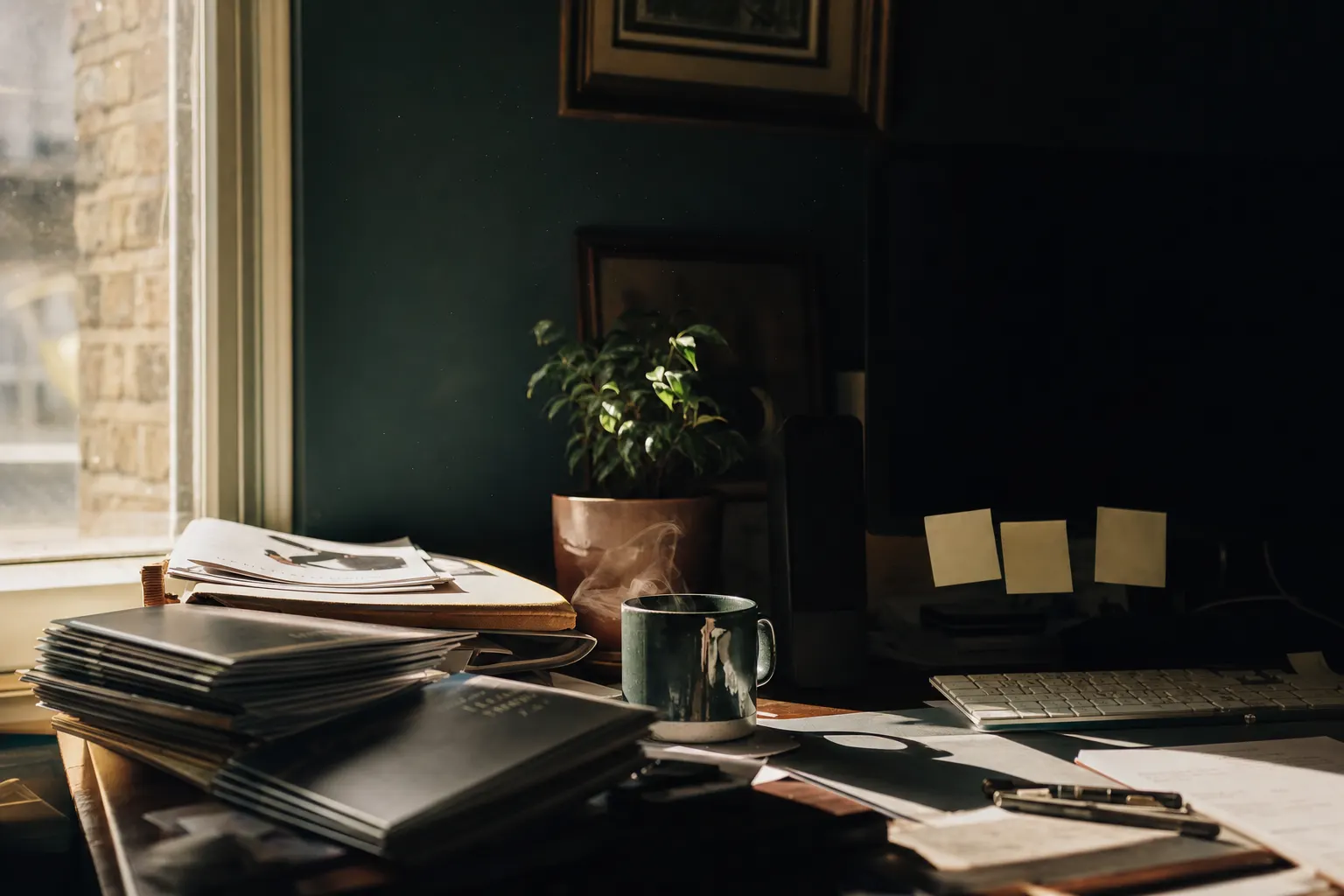
The image above was AI-generated — as ever, we'll always tell you.